Why fit comes before fabric or colour
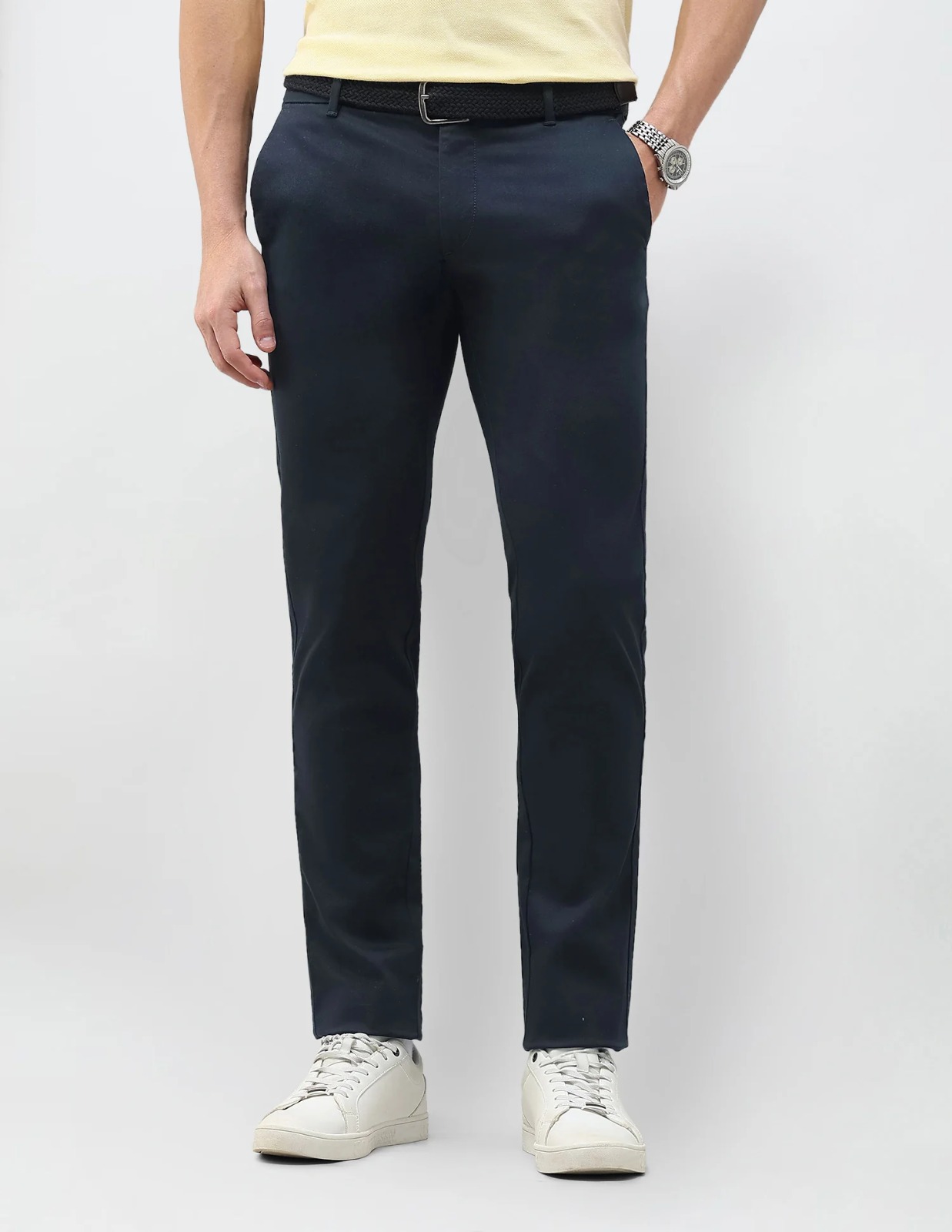
Most men choose formal trousers by colour first, then fabric, and only then check whether they fit. It should run the other way round. A well-fitted pair in an ordinary grey will look sharper than an expensive cloth that bunches at the seat or pools at the ankle. Fit is what turns formal trousers for men from a uniform item into something that looks considered.
The good news is that fit can be learned. Rather than relying on a vague sense of "too tight" or "too loose", you can check a handful of specific points in a mirror. Each one tells you something different, and together they form a reliable formal trouser fit guide you can use anywhere.
Start at the waist and seat
The waistband
The waistband should close comfortably without a belt doing the work. A useful rule of thumb: you should be able to slide two fingers flat inside the waistband at the front, but not much more. If the belt is cinching fabric into small gathers, the waist is too big. If the button strains or the waistband rolls over when you sit, it is too small.
Sit down before you decide. Waistbands that feel fine standing can dig in once you are seated at a desk for an hour, which is where men's office trousers spend most of their day.
The seat
The seat is the area most often ignored and the one that gives fit away from behind. Look for fabric that follows the curve of the body without pulling into horizontal lines (too tight) or hanging in a loose fold beneath the buttocks (too loose). The back pockets, if there are any, should lie flat rather than gaping open.
Judge trousers from the back as carefully as you judge them from the front. The seat is where fit is won or lost.
Thigh, knee and leg opening
Below the seat, the leg shape decides the overall silhouette. There are three points to check:
- Thigh: you should be able to pinch roughly an inch of spare cloth at the widest part of the thigh. Less than that and the fabric will strain when you sit or climb stairs; much more and the leg looks baggy.
- Knee: when you bend your knee, the fabric should move with you without tightening sharply across the kneecap. Persistent strain lines here mean the cut is too narrow for your legs.
- Leg opening: the hem width should be in proportion to your shoe. A very narrow opening over a substantial Oxford looks pinched; a very wide one swallows a sleek loafer.
The relationship between these three points is what separates a straight leg from a tapered one. If you are unsure which silhouette suits you, the comparison in our slim fit vs regular fit article walks through both in detail, and the Fits & Silhouettes room shows each shape side by side.
Where the rise sits
The rise is the distance from the crotch seam to the top of the waistband. It decides where the trousers sit on your body — at the natural waist, just below it, or on the hips. Formal trousers traditionally sit closer to the natural waist, which lengthens the leg line and keeps a tucked shirt neatly in place.
A rise that is too short pulls the crotch upward and creates tension at the front. A rise that is too long leaves extra fabric hanging between the legs. If either happens even though the waist size is correct, try a different cut rather than a different size. Our dedicated article on trouser rise and proportion explains how rise interacts with height and torso length.
When the waist fits but the seat or thigh does not, the problem is usually the pattern, not the size. Moving up one size often makes the waist too loose while barely helping the seat. Try a different cut first.
Choosing fit for your build
No single fit flatters everyone. Instead of following a trend, start from your own proportions.
Slim or lean builds
A gently tapered leg keeps the line clean without exaggerating thinness. Avoid cuts so narrow that they cling to the calf; a little ease reads as tailored rather than skinny.
Athletic builds with larger thighs
Look for a fuller thigh that tapers below the knee. This gives room where you need it while keeping the hem neat. Trousers with a small amount of stretch in the cloth can also help with movement.
Broader or fuller builds
A regular or straight leg with a mid-to-high rise creates a long, uninterrupted line. Very tapered hems tend to make the upper body look heavier by comparison, so keep the leg opening in proportion with the hip.
Taller men
Taller frames carry a slightly fuller leg and a longer rise well. Check that the inseam leaves enough length for the hem to meet the shoe without the trousers riding up when you sit.
The fitting-room test
Wear the shoes and the kind of shirt you plan to pair with the trousers, then run through these checks before deciding:
- Waistband closes without straining and sits level all the way round.
- Front pleats or the flat front lie smoothly, without pulling open.
- Seat follows the body with no horizontal pull lines or loose drape.
- Roughly an inch of fabric can be pinched at the thigh.
- Sitting and squatting feel comfortable; the waistband does not dig in.
- The crease falls straight down the centre of the leg to the shoe.
- The hem meets the shoe with the amount of break you prefer.
That last point deserves its own discussion. Hem length changes how the whole leg looks, and we cover it fully in understanding trouser length and break.
What a tailor can — and cannot — fix
Alterations can rescue a nearly-right pair, but only within limits. Knowing those limits stops you from choosing trousers that can never be made to fit.
- Easy: shortening the hem, taking in the waist slightly, tapering the leg from the knee down.
- Possible but limited: letting out the waist (depends on spare seam allowance), adjusting the seat a little.
- Difficult or not worth it: changing the rise, adding length to a short hem, rebuilding a thigh that is too tight.
As a general principle, choose trousers that fit your largest measurement — usually the seat or thigh — and let a tailor refine the rest.
Bringing it together
The right formal trouser fit is the one that lets you move, sit and stand without thinking about your clothes, while still looking clean from every angle. Check the waist and seat first, read the leg from thigh to hem, then judge the overall line in a full-length mirror. Once you know your preferred fit, every future choice becomes faster.
If you would like to see how different cuts compare in person, explore the Fits & Silhouettes page or get in touch with Options Mall in Vile Parle West, Mumbai — the team is happy to talk through fit with you.