The Form LabA Study in Modern Formal Trousers

Study 05 Textile character 10 observations

Fabric Observatory A visual study of textile character in men’s formal trousers

Cut decides the line of a trouser. Cloth decides how that line behaves — how it falls, creases, breathes, catches light and survives a long working day.

This observatory treats fabric the way an exhibition treats an object: slowly and closely. Seven chapters study the cloth families most often used for formal trousers for men — wool, wool blends, cotton, cotton blends, twill weaves, polyester blends and lightweight fabrics — followed by the properties worth reading before you choose, and notes on caring for what you own.

  • Detail ×3 — a magnified region of the same photograph
  • Readings — qualitative ranges, never measurements
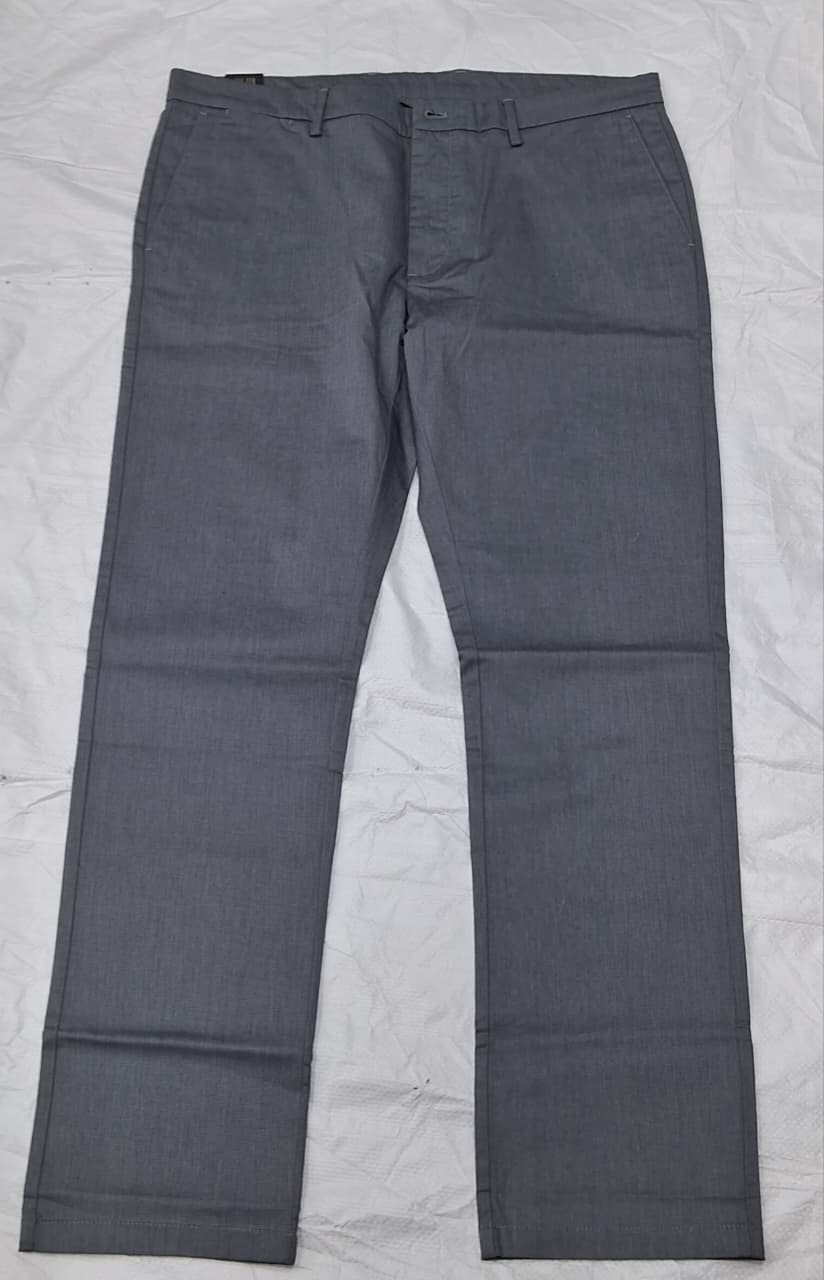
Grey formal trousers for men laid flat, showing a fine textured weave across a straight leg
Obs. 00A grey surface with a fine, visible grain — the texture reads as a soft mottle from a distance and as a woven structure up close.

Method

How to read this observatory

Every photograph here is a textile observation, not a label. Fibre content cannot be confirmed by looking at a picture, so the plates are presented as surface studies — matte or smooth, flat or grainy, crisp or fluid — placed beside the fibre family whose character they help to illustrate.

The fibre chapters themselves are general education: how a family of cloth tends to behave in formal trousers, and where constructions differ. When you are choosing a real pair, the garment’s care label is the only reliable record of what it is made from.

Fibre family · Animal fibre

Wool

The reference cloth of tailoring. Wool is the fabric most formal trousers are measured against, because of the way it hangs.

Wool fibres are naturally crimped and elastic. Woven into a trouser cloth, that crimp gives a fabric which drapes from the waistband in an unbroken line, recovers from creasing when it is rested on a hanger, and takes and holds a pressed front crease well. Surfaces range from the clean, slightly lustrous finish of a worsted to the softer, fuzzier face of a flannel.

Visual character

Wool tends to look matte-to-soft-sheen rather than shiny, and colour sits deep in the cloth — a navy or charcoal in wool usually reads richer than the same shade on a flat synthetic surface.

In practice

Fine, lighter-weight wool cloths are widely worn in warm cities because the fibre handles moisture well; heavier flannels belong to cool, air-conditioned rooms and travel to colder places. Wool generally prefers brushing, airing and professional cleaning to frequent machine washing.

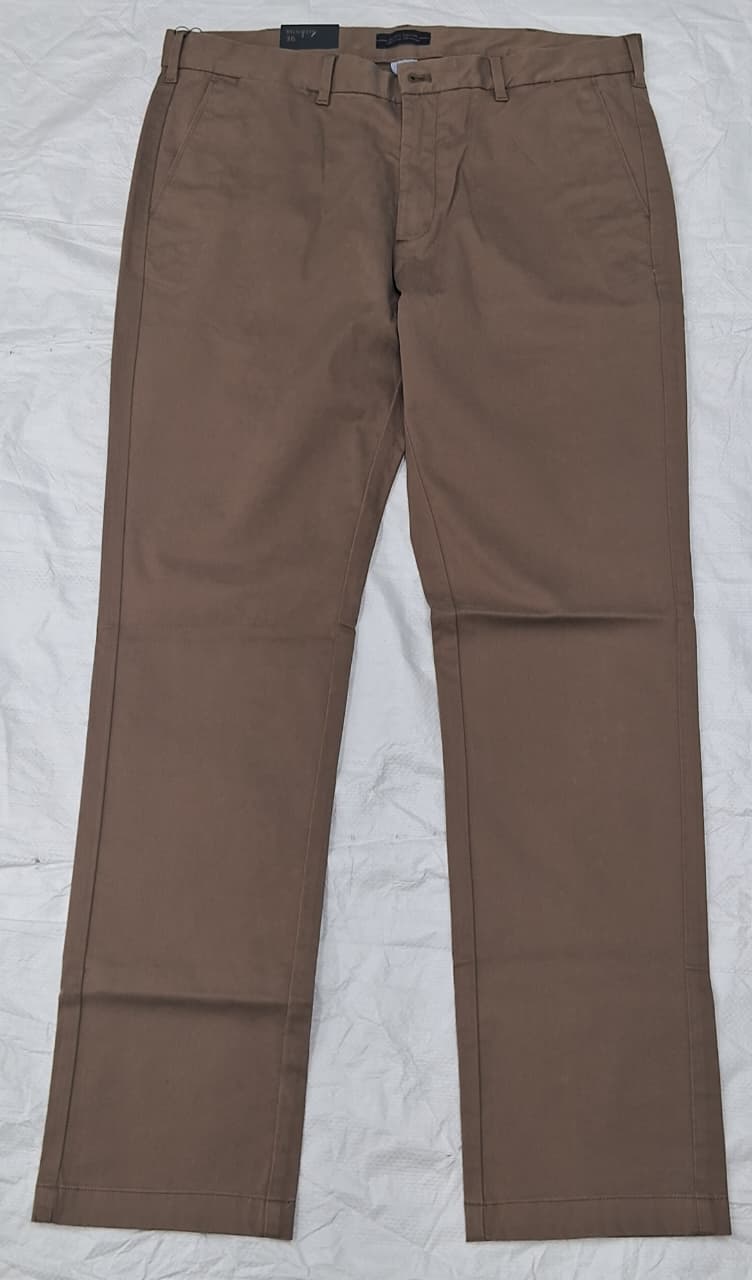
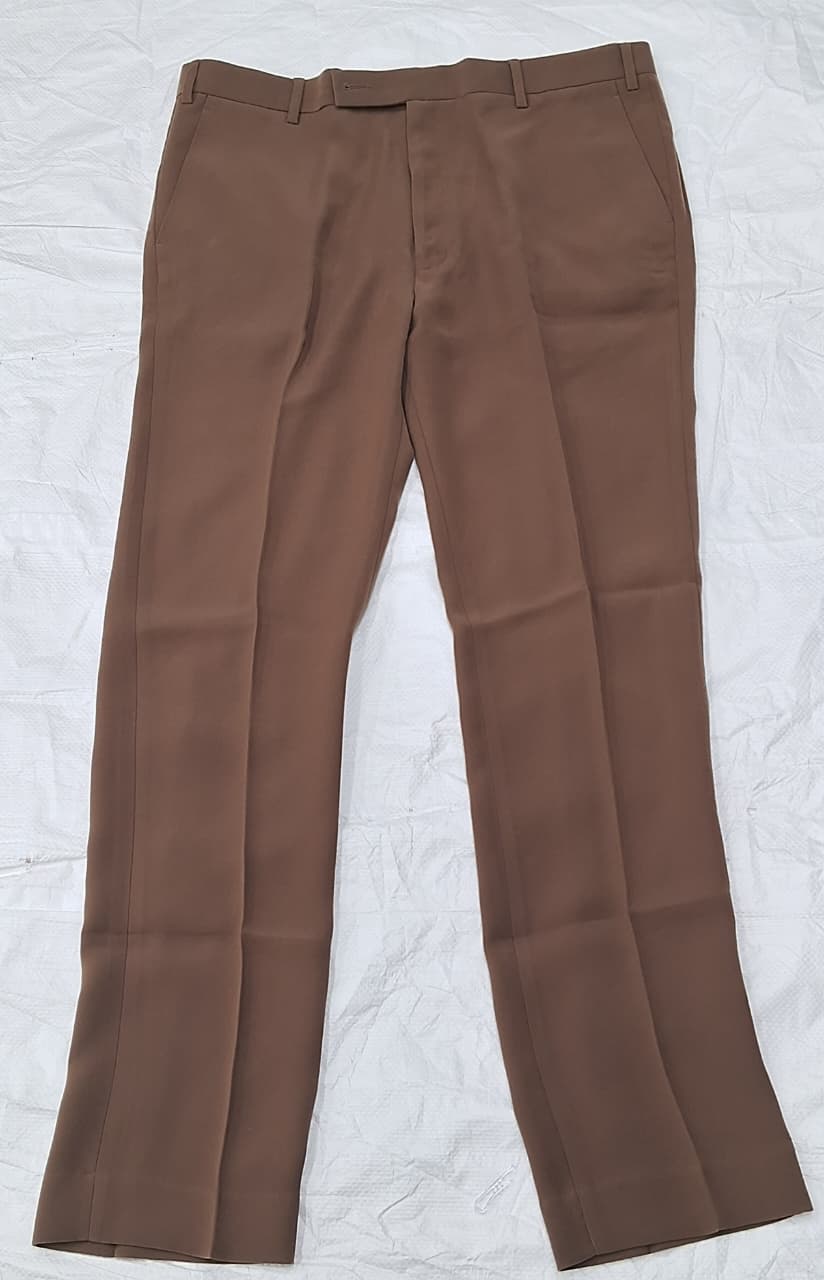
Rust-brown formal trousers laid flat, with a soft matte surface and a fluid fall through the leg
Obs. 01A soft, matte surface and a fluid fall through the leg — the kind of handle often associated with wool cloth.
Weight
From tropical-light to dense flannel
Drape
Typically fluid and clean-falling
Crease recovery
Good, especially after resting overnight
Ease of care
Needs some attention; usually dry-clean
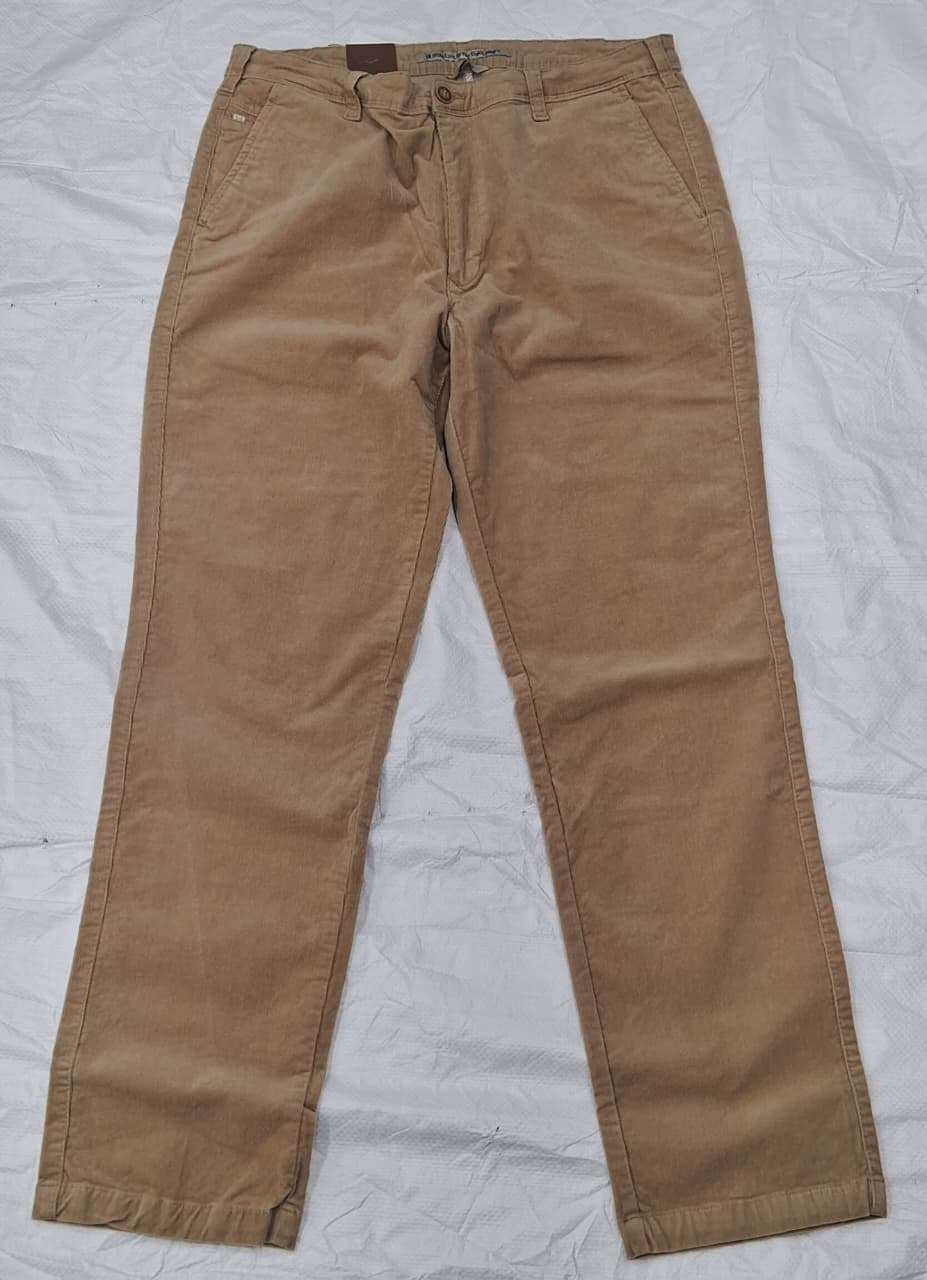
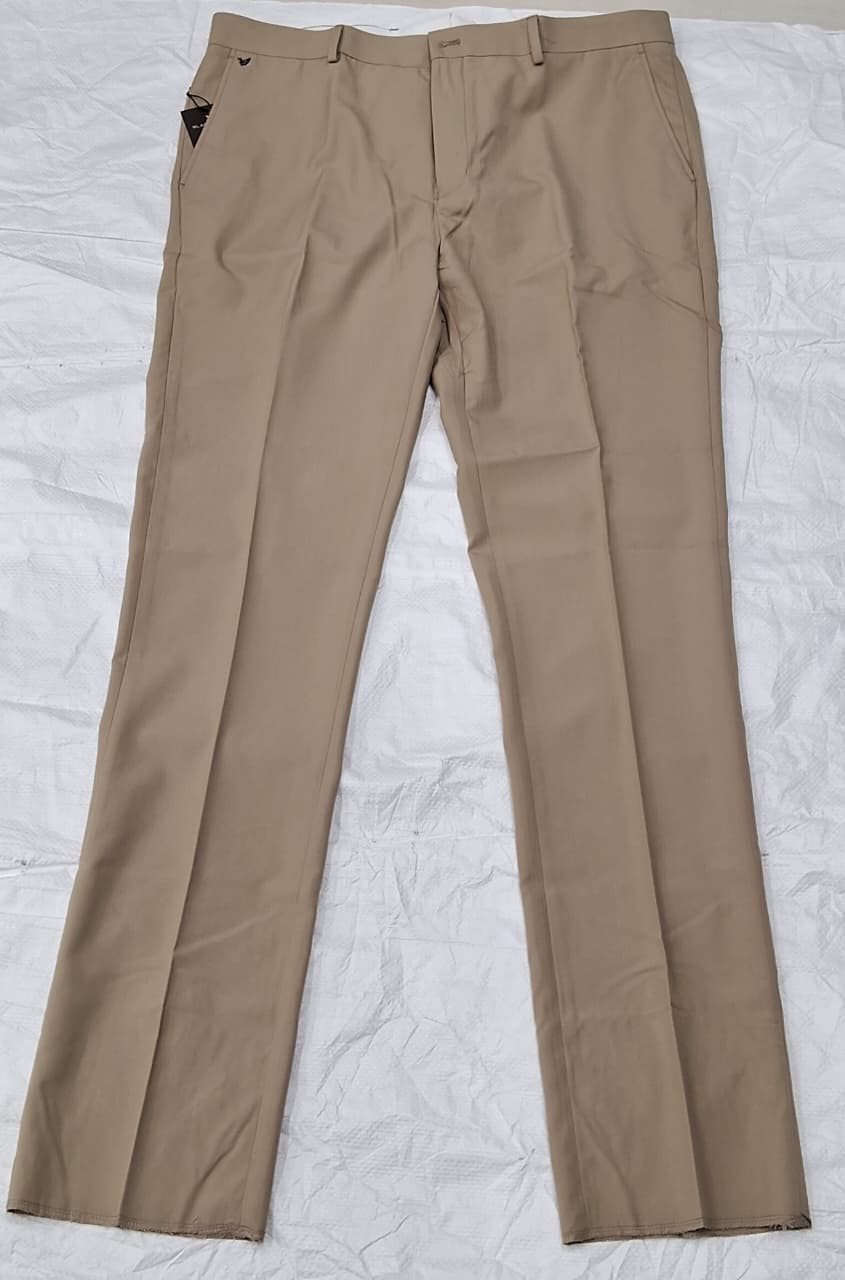
Khaki formal trousers laid flat, with a clean, even surface and a sharply pressed front crease
Obs. 02An even, close surface holding a sharp pressed crease from waistband to hem.

Fibre family · Blended cloth

Wool blends

A negotiation between two sets of strengths: the drape of wool and the resilience of a second fibre.

Proportions vary from cloth to cloth; the diagram shows the idea, not a ratio.

Wool is commonly blended with polyester, and sometimes with viscose, elastane or other fibres. The aim is usually practical: a cloth that keeps much of wool’s fall and handle while creasing less on a commute, standing up to more frequent wear, or holding its shape with a little stretch.

What changes with the blend

The more of the partner fibre a cloth contains, the more its behaviour tends to shift — often a slightly crisper hand, a cleaner surface, quicker recovery from creasing and simpler care. Wool-rich blends usually stay closer to the drape and depth of pure wool. Neither direction is “better”; they suit different routines.

Why they are popular for office wear

For men’s office trousers worn several days a week, a blend can be a sensible balance of appearance and upkeep. Reading the care label tells you the actual composition and how the maker recommends cleaning it.

Chapters 03 & 04 · Plant fibre, studied as a pair

Cotton

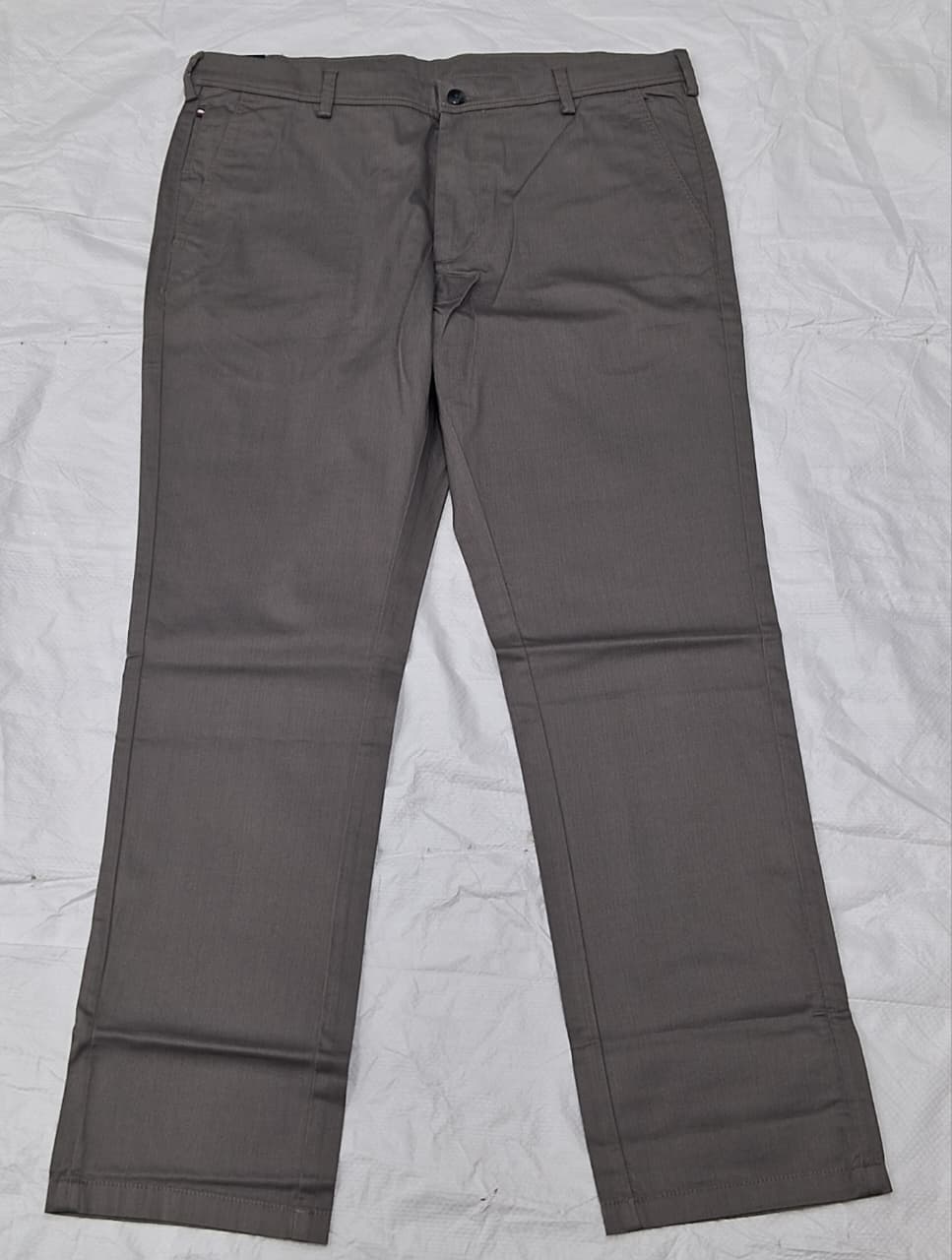
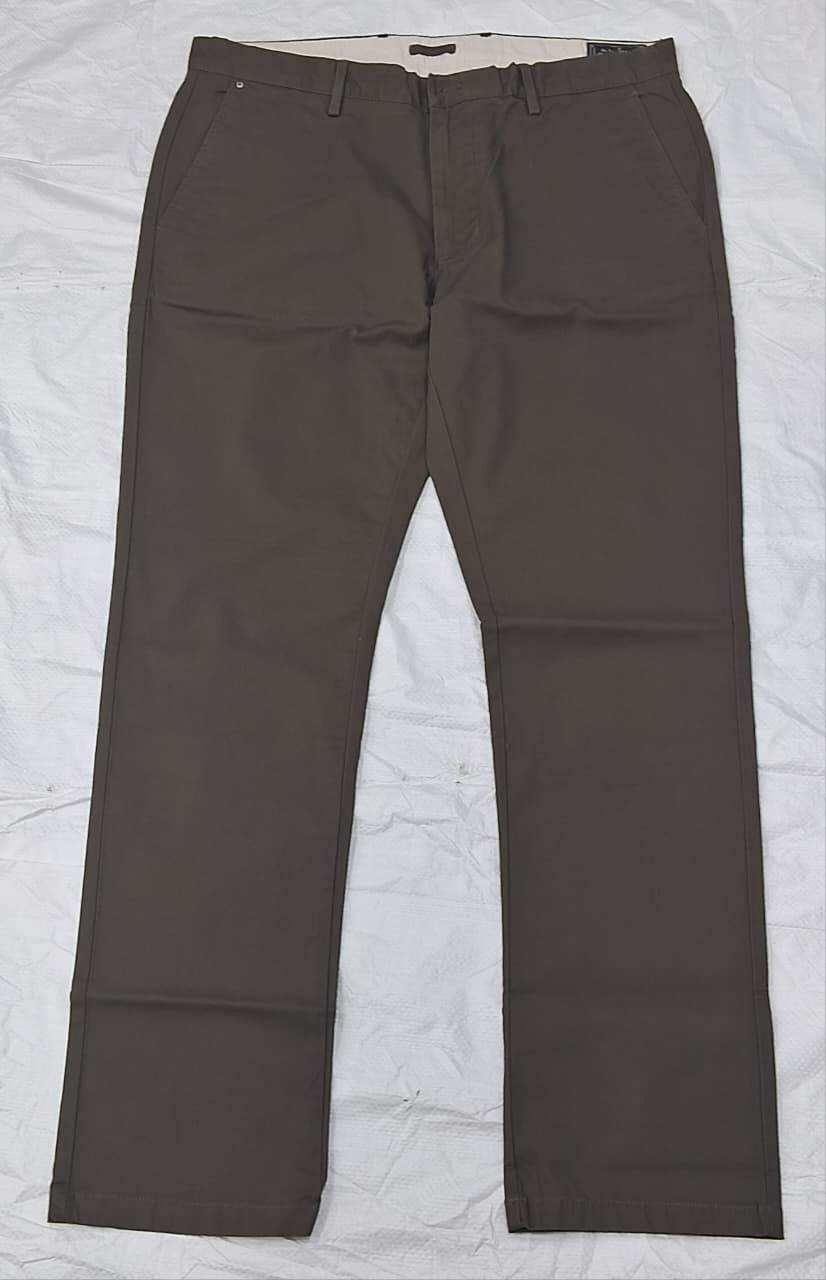
Dark olive trousers laid flat, showing a dry, matte cloth surface with a relaxed fall
Obs. 03A dry, matte face that absorbs light rather than reflecting it.

Cotton is soft, breathable and comfortable against the skin, which is why it is so common in smart trousers and chinos. Its surface is typically matte with a gentle, natural texture, and it takes colour in a slightly softer, more casual way than wool.

Strengths and limits

Cotton handles heat and daily wear well and is usually machine-washable. It also creases more readily and holds a pressed crease less firmly, so pure-cotton trousers tend to sit at the smart-casual end of formal dressing — ideal for relaxed offices and weekends, less so for the most formal settings.

Breathability
High
Wrinkle resistance
Low to moderate

Cotton blends

Brown trousers laid flat, with a smooth, fine-grained surface and neat straight legs
Obs. 04A smoother, tighter face than a dry cotton, with slightly crisper edges.

Blending cotton with polyester, elastane or other fibres changes its everyday behaviour. A small share of elastane adds stretch and comfort when sitting; polyester can help a cloth crease less and dry faster after washing.

Where they sit

Cotton blends often look a little cleaner and keep their shape better through the day than pure cotton, while staying comfortable. They are a practical bridge between casual chinos and business formal trousers, and many are made for easy home care.

Breathability
Moderate to high
Wrinkle resistance
Moderate, varies with blend

Weave structure · Not a fibre

Twill

The diagonal line. Twill is a way of weaving, not a material — wool, cotton and blends can all be woven as twill.

Diagonal weave structure

In a plain weave, each crosswise thread passes over one lengthwise thread and under the next, producing a simple chequerboard. In a twill, each crossing thread floats over two or more threads before going under, and the starting point steps along by one on every row. Those stepped floats line up into diagonal ribs, called wales, that run across the cloth.

Visual character

The diagonal gives twill a subtle sense of movement and depth, even in a solid colour. Fabrics such as gabardine and many chinos are twills; at a distance they read as plain, but in raking light the fine slant becomes visible.

Why it suits trousers

Because the threads are packed closely, twills tend to be durable, drape well and resist showing marks. They hold a crease neatly, which is why twill constructions are so often used for formal trousers.

Plain weave diagram: alternating squares like a chequerboard
A Plain weave — over one, under one
Two-over-one twill diagram: dark squares step diagonally
B 2/1 twill — a fine diagonal
Two-over-two twill diagram: broader diagonal bands
C 2/2 twill — a bolder wale
Tan trousers laid flat, showing a visibly ribbed, textured surface running down the leg
Obs. 05Observe the visible texture: fine ribs and raised lines give the surface a tactile, almost corded rhythm.

Fibre family · Synthetic & blended

Polyester blends

The most practical family in the cabinet — and the one with the widest variation in quality and feel.

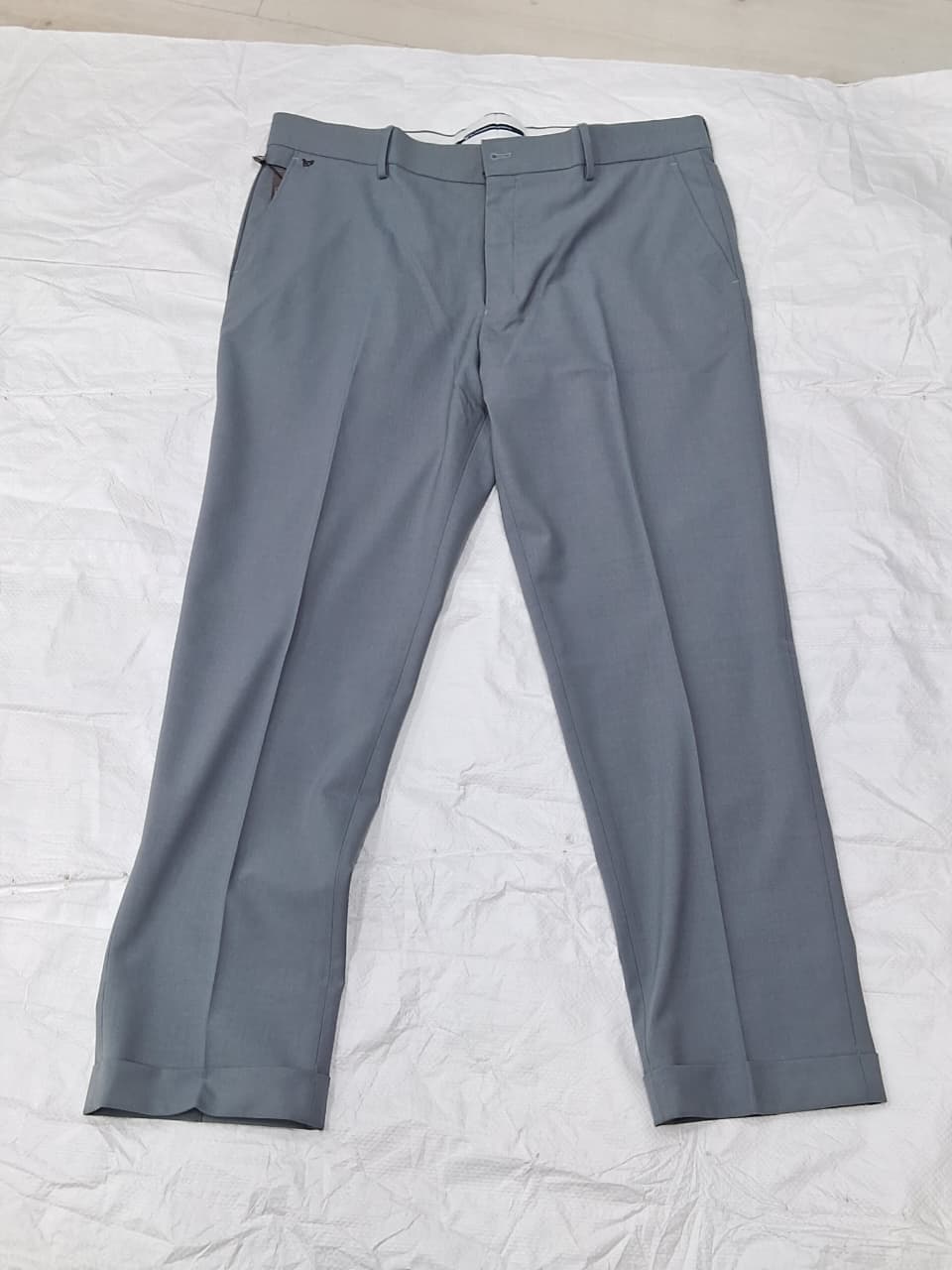
Blue-grey formal trousers laid flat, with a smooth, even surface, slim leg and neat turned hems
Obs. 06A smooth, even face with a faint sheen and crisp, clean edges.

Common characteristics

Polyester is strong, resists stretching and shrinking, and recovers quickly from creasing. In trouser cloths it is very often blended — with viscose for a softer hand, with wool for drape, with cotton for comfort, or with elastane for stretch. Blends typically hold their colour and shape through repeated washing.

Practical considerations

Wrinkle resistance and easy care make these blends popular for long days, travel and frequent wear. The trade-off is breathability: a higher synthetic share can feel warmer in humid weather than natural fibres. Keep irons on a lower setting — too much heat can leave a shine on the surface.

Variation between constructions

“Polyester blend” describes a very wide range. Yarn quality, weave, finishing and the partner fibre all change the result: some read flat and glossy, others are brushed, textured or melange and look much closer to wool. Judge by the hand, the drape and the surface in daylight rather than by the word on the label alone.

Chapter 07 · Climate and comfort

Lightweight fabrics

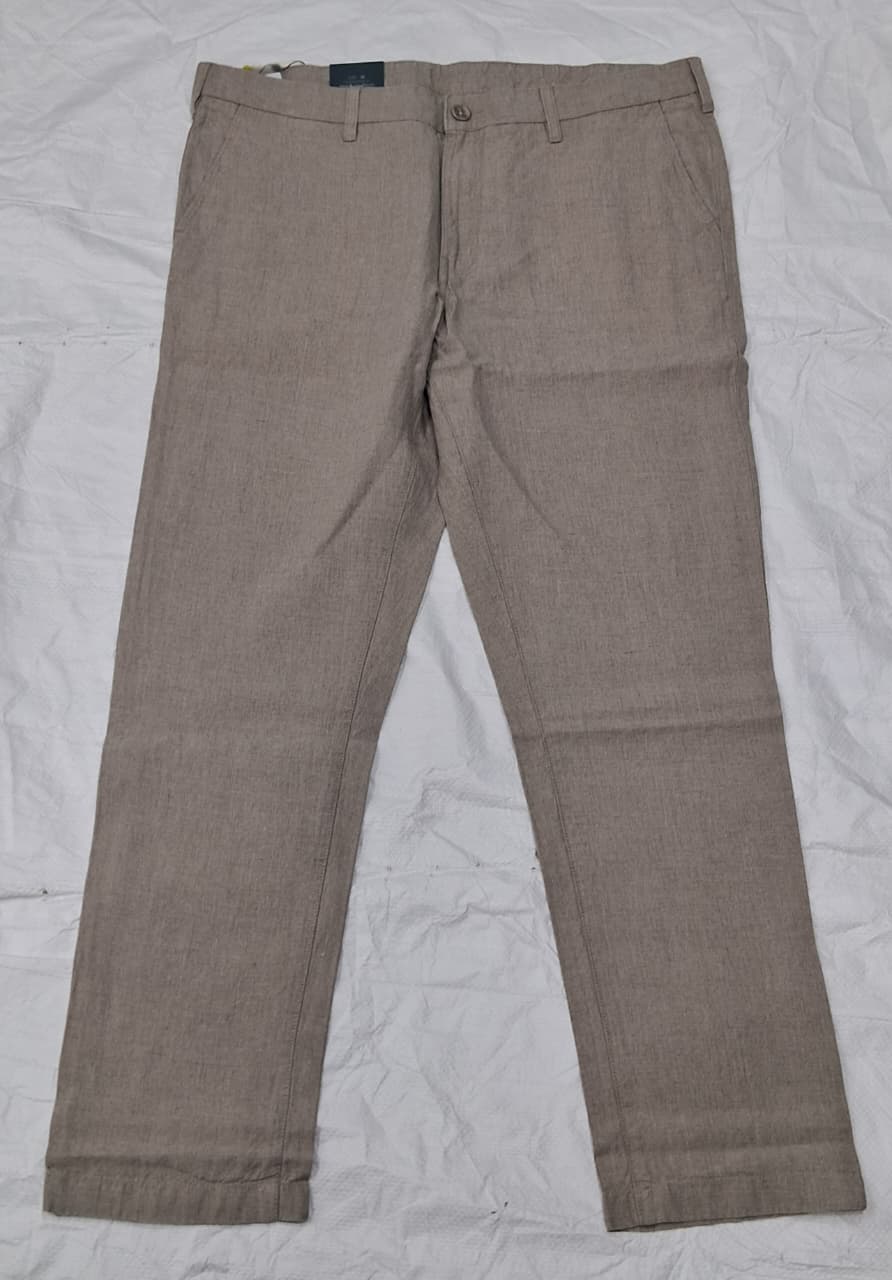
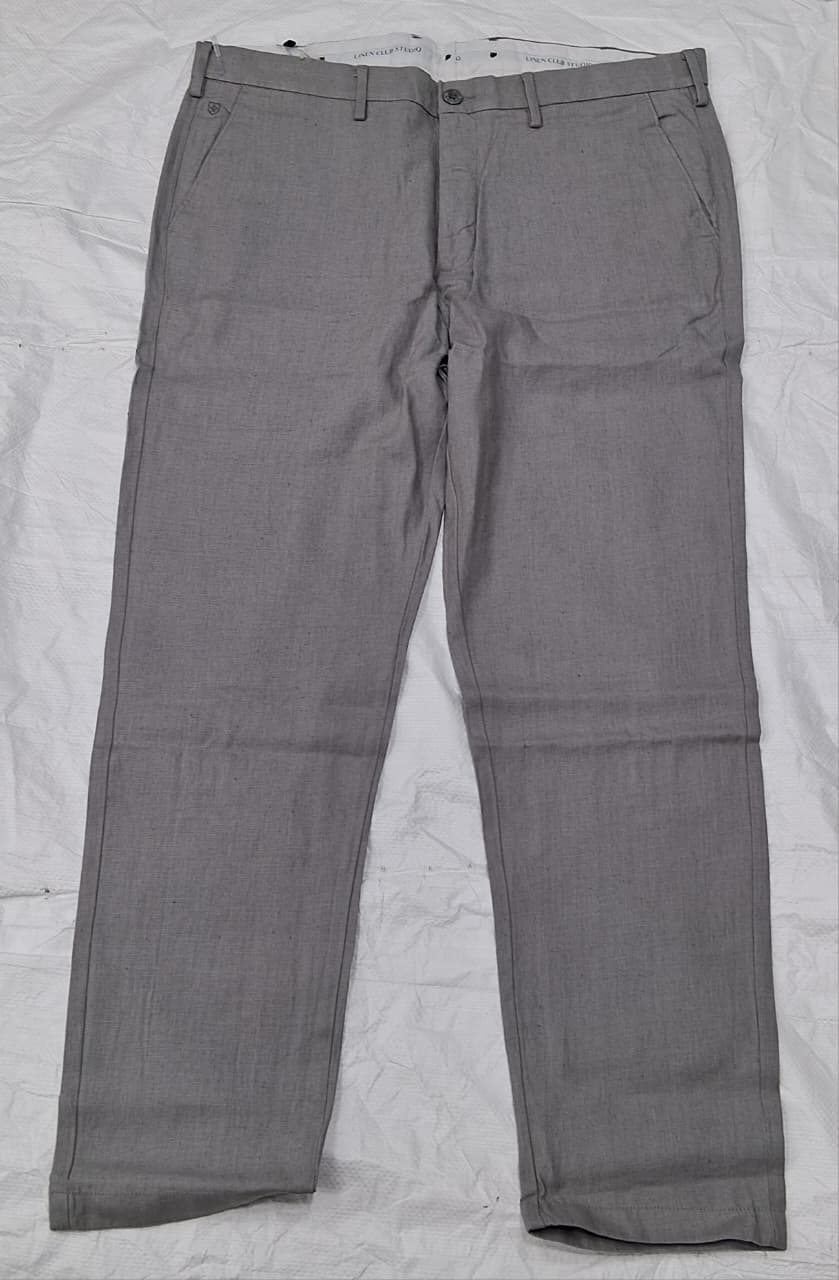
Taupe lightweight formal trousers laid flat, with a fine, airy surface and a relaxed straight leg
Obs. 07A fine, airy surface with a light flecked texture — a cloth that looks as if it lets the air through.

Warm-weather dressing

In a warm, humid coastal climate like Mumbai’s for much of the year, the weight and openness of a cloth matter as much as its fibre. Lighter cloths with a more open weave let air move and moisture escape, and natural or natural-rich fibres usually feel cooler than dense synthetics. Lighter colours reflect more heat in direct sun.

A lightweight cloth will tend to crease more and drape less heavily than a mid-weight one, so a slightly more relaxed cut, a gentle crease and an honest acceptance of a few wrinkles by evening are part of the look.

Everyday comfort

  • Open, fine weaves breathe more freely than tight, heavy ones.
  • A half-lining or no lining keeps trousers lighter, though a lining can help very fine cloth hang better.
  • A little stretch adds comfort on long commutes and when sitting for hours.
  • Moving between heat and air-conditioning suits a light-to-mid weight better than either extreme.

For anyone in Thane or across Mumbai weighing up formal trousers for the working week, comfort in heat is a fair first question to ask of any cloth.

Chapter 08 · Instrument panel

Eight properties
worth reading

Before fibre names, read behaviour. These are the qualities that decide how formal trousers for men actually feel and look over a day.

  1. Fabric weight

    Heavier cloths hang straighter, crease less and feel warmer; lighter cloths are cooler but move and wrinkle more. Mid-weights are the most adaptable for year-round office wear.

    Look for how the leg falls when held up by the waistband.

  2. Texture

    Smooth surfaces read sharper and more formal; visible texture — melange, slub, rib or twill — adds depth and hides minor creases, and leans slightly more relaxed.

    Look for the surface in daylight, not only under shop lighting.

  3. Drape

    Drape is how cloth falls under its own weight. Good drape gives a clean, uninterrupted line from hip to hem; poor drape clings, bunches or stands away from the leg.

    Look for a smooth line over the shoe when standing.

  4. Breathability

    Air and moisture moving through the cloth. It depends on fibre, yarn and how tightly the cloth is woven — an open, fine weave in a natural-rich fibre usually breathes best.

    Look for light passing through when held up to a window.

  5. Wrinkle resistance

    How well cloth resists and recovers from creasing at the knee, lap and back of the leg. Synthetic-rich blends tend to score well; linen and pure cotton crease most readily.

    Look for recovery after squeezing a fold in your hand for a few seconds.

  6. Maintenance

    Washable or dry-clean only, ironing temperature, drying method. Easy-care cloths suit trousers worn several times a week; delicate ones reward a little more effort.

    Look for the care label before the first wear.

  7. Fabric appearance

    Sheen, depth of colour and surface clarity. A soft matte finish reads quietly expensive; a strong shine can look less formal in daylight. Colour depth changes the same shade noticeably.

    Look for the colour next to a white shirt cuff.

  8. Seasonal considerations

    Lighter, open cloths and paler shades for heat and humidity; mid-weights for air-conditioned offices and monsoon months; denser cloths for cooler evenings and travel to colder places.

    Look for where you will actually spend most of the day.

Comparative study

Two greys, two surfaces

Colour alone tells you little about a cloth. These two observations sit close in shade yet behave very differently to the eye — one diffuse and heathered, the other ordered and structured. Texture is what separates them.

Blue-grey melange trousers laid flat, the mixed-tone yarns giving a softly speckled surface
Obs. 08 · MelangeYarns of slightly different tones mixed together create a soft, speckled, heathered effect.

Diffuse & heathered

Melange surfaces soften strong colour, disguise small creases and marks, and read relaxed but polished — a quietly versatile option for office wear trousers for men.

Grey trousers laid flat, showing a firm, structured weave with a fine regular pattern
Obs. 09 · StructureA firm, regular weave with a fine repeating pattern visible across the leg.

Ordered & structured

A defined weave adds body and a crisp, architectural feel. It holds its shape well and gives a plain colour a subtle graphic quality up close.

Conservation

Care notes

Good cloth lasts longest when it is rested, brushed and pressed sensibly. These general notes apply to most formal trousers; the garment’s own care label always comes first.

Rest between wears

Rotating two or three pairs gives each one a day to recover. Hang trousers by the hems or folded along the crease over a wide hanger bar; most creases from sitting fall out overnight, particularly in wool and wool-rich blends.

Brush, air, then clean

A soft clothes brush lifts dust and lint from the surface. Airing trousers after a long day is often enough between cleans. Over-cleaning — especially dry cleaning — wears fibres and finishes faster than wearing does.

Washing versus dry cleaning

Cotton, cotton blends and many polyester blends are made for gentle machine or hand washing; turn them inside out and use a cool cycle to protect colour. Wool and structured, lined trousers usually prefer dry cleaning. When in doubt, follow the label.

Pressing the crease

Press through a damp pressing cloth rather than directly on the fabric — it prevents shine, especially on dark synthetics. Align the inseam and outseam, then press the front crease from hem upward. Let the trousers cool on the board before hanging so the crease sets.

Humidity and the monsoon

In damp months, let trousers dry fully before putting them away, give the wardrobe some airflow, and avoid storing them in sealed plastic. Wet hems and splashes are best dried flat on a hanger at room temperature, then brushed once dry.

Travel and storage

Roll or fold along the existing crease and pack trousers near the top of a bag. On arrival, hang them in a steamy bathroom for a few minutes to release creases. For long-term storage, clean first and use breathable garment bags.

Continue the study

From cloth to colour, and into the wardrobe

Fabric and colour work together: the same navy looks deeper in a matte wool than on a smooth blend, and texture changes how a shade pairs with a shirt. Carry what you have observed here into the next studies.