Dressing for the working day
Most advice about formal wear for men is written for occasions: the wedding, the interview, the black-tie dinner. Office wear trousers for men have a harder job. They are worn several days a week, sat in for hours, carried through crowded trains and auto-rickshaws, and still expected to look composed when someone calls you into a meeting at six in the evening.
That changes the brief. A trouser chosen for the office should be judged on three things in this order: how it behaves when you sit and move, whether its colour works with the shirts you already own, and whether the cloth recovers from a long day. Style details matter, but they come last.
It also helps to be honest about your workplace. A client-facing role in banking or law usually calls for business formal trousers in dark, quiet colours worn with a jacket. A creative studio or a technology office might accept lighter colours and a softer cut. The principles below hold for both; only the range of acceptable choices widens or narrows.
A fit that works at a desk
A trouser that looks perfect standing still can fail the moment you sit down. Before anything else, test the fit in the positions you actually spend your day in.
Sit, bend and climb
Sit on a chair and check the waistband: it should not dig in or roll over. The seat should not pull tight across the hips, and the fabric should not ride far up the shin. Climb a step or two and see whether the thigh binds. These small strains, repeated across a day, are what crease and stress the cloth over time.
Slim, but not tight
For most offices a slim or tailored-straight cut is the modern default: close enough to look neat under a shirt, roomy enough to move. If you find yourself choosing between a size that looks sharp standing and one that feels comfortable seated, choose comfort and have the leg adjusted. Our formal trouser fit guide walks through waist, seat, thigh and taper in detail, and the Fits & Silhouettes room compares the main cuts side by side.
Try the trouser on with the shoes and the belt you will actually wear to work. A different heel height or a thicker belt can change where the waistband sits and how the hem falls by more than you would expect.
Length that suits long days
For office wear, a slight break or no break is the practical choice. A long, pooled hem picks up dust on the commute and frays at the back. A very cropped hem can feel too casual in conservative workplaces. A hem that just touches the top of the shoe is the safe middle ground.
The office colour shortlist
The best formal trouser colours for work are the ones that disappear into a polished whole. Four shades do almost all the heavy lifting:
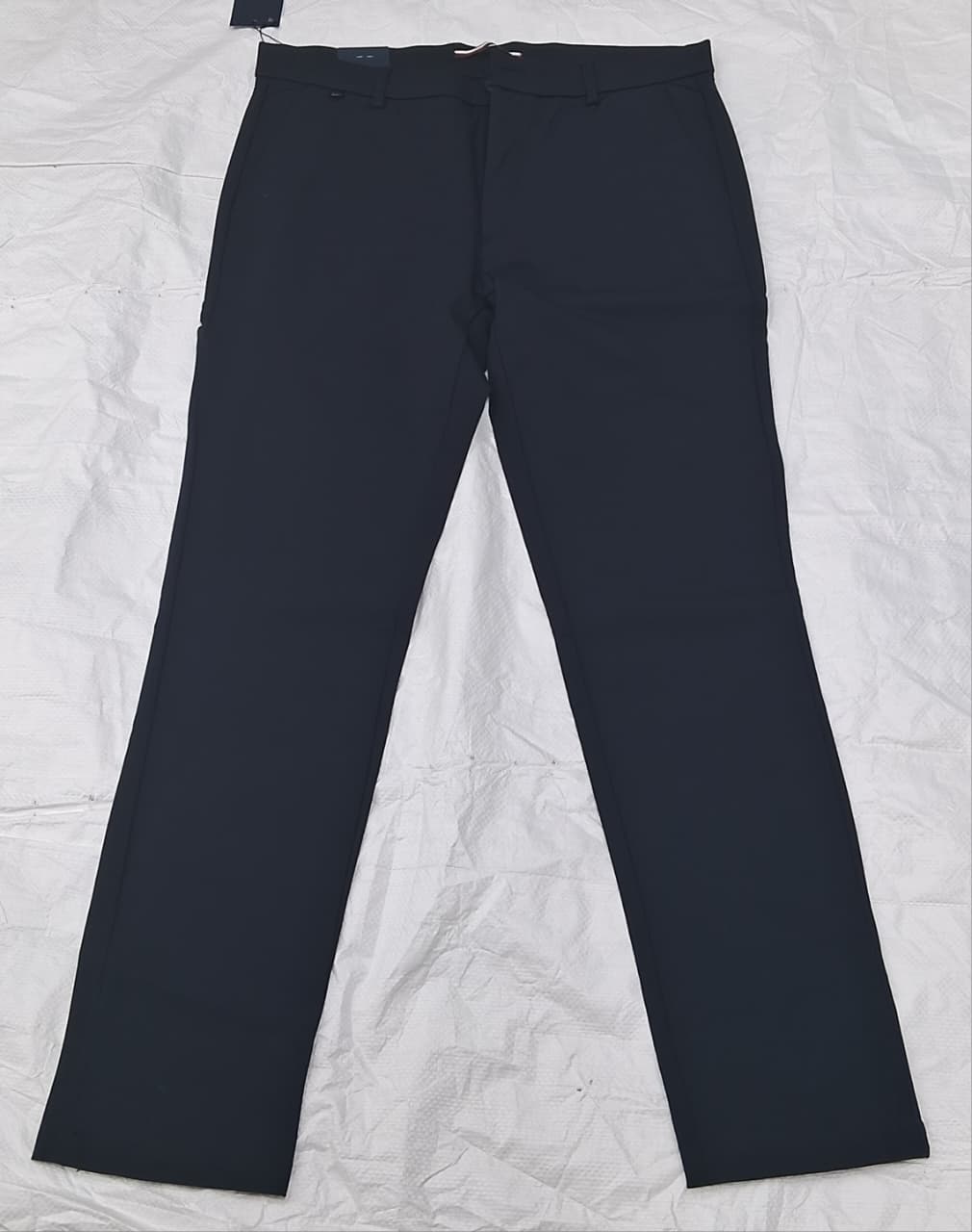
- Navy — the most adaptable office colour. It sits well with white, light blue, pink and lavender shirts, and with both black and brown shoes.
- Charcoal grey — slightly more serious than navy, excellent for senior meetings and presentations.
- Mid grey — lighter and friendlier, useful in warmer months and easy to pair with patterned shirts.
- Black — very formal and sharp, but less forgiving with brown shoes and casual shirts. Best kept for evening events or strict dress codes.
Once these are covered, earth tones such as taupe, stone or olive can add variety on less formal days. For a deeper look at how shades interact with shirts, visit Colour & Composition.
Choose the trouser that makes your shirts look better, not the one that asks to be noticed.
Fabric for the commute
In a warm, humid city the fabric decision is as important as the fit. Heavy cloth feels oppressive on the platform; very light cloth can crease into a map of your day by lunchtime.
What to look for
- Lightweight wool or wool blends breathe well and recover from creasing overnight when hung properly.
- Polyester-viscose blends are common in men's office trousers because they hold a crease, resist wrinkles and are easy to care for.
- A small amount of stretch adds comfort for long seated hours, though too much can make the cloth look clingy.
- Cotton twill works for relaxed offices but creases faster and reads more casual than a pressed formal cloth.
A matte or very subtly textured surface tends to look more refined in office lighting than a shiny finish. The Fabric Observatory covers weave, weight and handle in more depth.
Details that read as business
Small construction choices quietly signal whether a trouser belongs in an office or on a weekend.
- Slanted or on-seam side pockets look cleaner than patch pockets, which lean casual.
- A pressed centre crease lengthens the leg and instantly makes a trouser look more formal.
- Belt loops or side adjusters are both appropriate; side adjusters give a cleaner waist if you often wear a jacket.
- Flat front or single pleats both work at the office — the choice is about comfort and build, as covered in Pleated vs Flat-Front Formal Trousers.
- No visible branding, contrast stitching or decorative zips; these pull the trouser towards casual wear.
The office checklist
Before you commit to a new pair of formal trousers for men, run through these checks:
- Sit down for a full minute. The waist, seat and thighs stay comfortable and the hem does not rise above the sock line.
- The colour works with at least three shirts you already own.
- The cloth springs back when you crush a corner in your hand for a few seconds.
- The pockets lie flat with your phone and wallet in them.
- The hem touches the shoe with a slight break or none at all.
- Nothing about it — shine, stitching, hardware — draws attention before your face does.
A rotation of three or four pairs that pass this test will cover most working weeks. Rotating also gives each pair a day or two to rest, which helps the cloth keep its shape for longer.
To see how these pieces fit into a wider plan, explore The Professional Wardrobe. And if you would like to talk through office trousers in person, Options Mall is in Vile Parle West, Mumbai — find the details on our contact page.